Why the calculator adds 20 percent
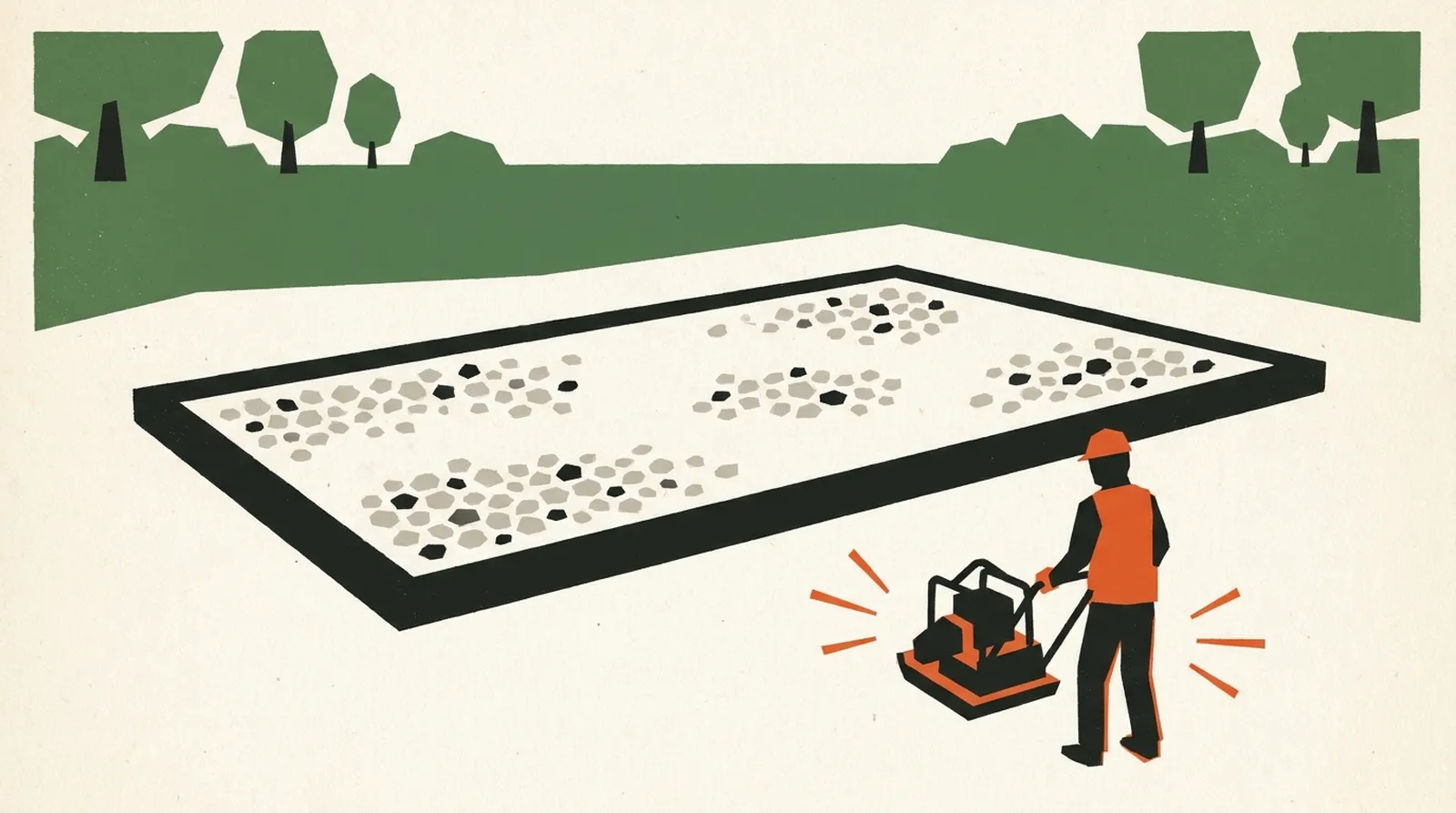
Crusher run is sold loose, but you lay it in layers and compact it. Compaction squeezes the stone and fines together, so a compacted inch takes more than an inch of loose stone. Allow 15 to 25 percent extra for that, on top of any unevenness in the ground. The calculator starts at 20 percent; change it if your supplier or contractor uses a different figure.
Example: paver patio base. A 12 × 16 ft patio with a 4 inch compacted base:
- Area: 192 sq ft
- Compacted volume: 192 × 0.333 = 64 cu ft = 2.37 cubic yards
- With 20 percent for compaction: 2.84 cubic yards loose
- Weight: 2.84 × 1.5 = about 4.3 tons
Crusher run depth guide
| Project | Compacted depth | Notes |
|---|---|---|
| Walkway | 3–4 in | Compact in one lift |
| Paver patio | 4–6 in | Plus about 1 in of bedding sand on top |
| Paver driveway | 8–12 in | Several compacted lifts; follow the paver maker’s guide |
| Shed pad | 4–6 in | Make it a foot wider than the shed |
| Gravel driveway top layer | 2–3 in | Over a #3/#57 base. See the driveway gravel calculator |
Compact in lifts of about 2 to 4 inches. Dampen the stone a little before compacting; slightly moist crusher run packs tighter than bone-dry stone.
Crusher run coverage
At about 1.5 tons per cubic yard, loose:
| Depth (loose) | Sq ft per cubic yard | Sq ft per ton (about) |
|---|---|---|
| 2 in | 162 | 108 |
| 3 in | 108 | 72 |
| 4 in | 81 | 54 |
| 6 in | 54 | 36 |
Crusher run vs #57 stone
| Crusher run | #57 stone | |
|---|---|---|
| Contains fines | Yes | No |
| Compacts hard | Yes | No, it stays loose and open |
| Drains | Slowly | Freely |
| Best for | Bases under pavers, sheds, walkways, driveway tops | Drainage, French drains, under slabs, driveway middle layer |
If the job needs to carry weight and stay flat, use crusher run. If it needs to move water, use the #57 stone calculator.
Recycled crusher run
Many yards also sell recycled concrete aggregate crushed to a similar grade. It compacts well and often costs less. It can contain bits of rebar or asphalt, so it is better for bases than for visible surfaces.
Compaction figures and weights are typical, not exact. If a contractor or engineer has given you a compacted density, use their numbers.
Questions people ask
- How much crusher run do I need?
- Multiply length × width × depth (ft) and divide by 27 for cubic yards, then multiply by about 1.5 for tons. Add 15 to 25 percent because crusher run shrinks when compacted.
- How much does a cubic yard of crusher run weigh?
- About 2,800 to 3,000 pounds loose, roughly 1.4 to 1.5 tons. It is heavier than clean stone because the fines fill the gaps.
- How deep should crusher run be?
- About 4 inches compacted for walkways and patios, 4 to 6 inches under pavers and sheds, and 2 to 3 inches as a driveway top layer.
- What else is crusher run called?
- Depending on the region: dense grade aggregate (DGA), 3/4 minus, road base, aggregate base course (ABC), quarry process (QP), crushed aggregate base, or a state DOT number.